



Transcript
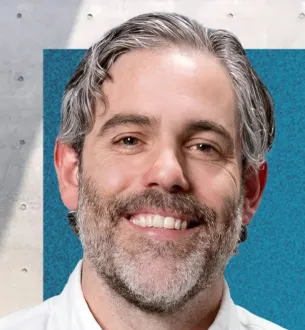
Al Ludwig (00:00)
There is a point where you are no longer just running a media plan. You are saturating a market so thoroughly that the advertiser’s face becomes part of the consumer’s normal visual environment. You are no longer asking whether the campaign is effective, you’re asking whether the brand has become mentally embedded. Hi, I’m Al Ludwig, host of the law firm Brand Builders Podcast and CEO of Practice Made Perfect, where we’ve managed more than half a billion dollars in marketing for law firms across the country. Happy to be here.
And provide value however we can. Now back to the episode. Today on the Law Firm Brand Builders Podcast, we’re gonna talk about what the biggest PI advertisers are really buying. Most people look at the billboards, the TV spin, the frequency, and the sheer volume, and they stop there. They say, Well, of course the firm’s winning, they’re everywhere. And that is part of it. But underneath all of that, something more important is happening. They’re building recognition before the consumer.
ever needs them. And that matters in the personal injury space because people are rarely choosing a lawyer in a calm analytical moment. They’re choosing after something bad has happened, there’s been a wreck, someone’s hurt, somebody’s overwhelmed. And in moments like that, people don’t want to start from the zero. They want an option that already feels known. That is what makes this so interesting to me. You know, research suggests adults encounter about 40 unique faces per day. Most people look at the billboards, the TV spin,
The frequency, the sheer volume they put out there, ⁓ but they kind of stop thinking there. They say, well, of course the firm’s winning. They’re everywhere. And that’s definitely part of it. But underneath all of that, there’s something more important happening. These law firms are building recognition before the consumer ever needs them. And that matters in the personal injury space because people are rarely choosing a lawyer in a calm analytical moment. They’re choosing after something bad has happened. There’s been a bad wreck.
Somebody’s hurt, they’re overwhelmed. And in moments like that, people don’t want to start from zero. They want an option that already feels known. That is what makes this so interesting, particularly the face diet for me. Research suggests adults encounter about 40 unique faces per day. And then separate face diet researchers has found that about 75% of face exposure is familiar faces, and 44% is seen at a three quarter view.
So before we ever get to billboards or legal marketing, the baseline reality is that the brain already lives in a world where familiar faces dominate. I’ve worked on media placement and legal marketing strategies for law firms across the country. And before this, I was in-house at a large PI law firm where we had more than a thousand billboards across seven small and mid-sized markets. Most people would look at it and call it overkill. And on paper, it was. We easily hit the standard marketing thresholds people talk about for reach and
Frequency. We had already crossed the line of is it enough media for the campaign to work? But then we kept going. And that’s where this became really interesting. Because once you get beyond basic effectiveness, you start entering a different territory. You’re no longer just asking whether the market has seen you enough. You’re asking whether you’re becoming one of the faces the market knows. At that point, you’re not just benefiting from awareness, you’re starting to monopolize the mere
Exposure effect. And that’s the broader thesis here. The biggest PI advertisers are not just trying to get seen. They’re trying to make sure that when the moment comes, they are already in the consumer’s head. Not as a stranger, but as a familiar option, a familiar face. So what does the face diet mean? You’ll hear me throw this term out there a lot. So when I say face diet, I mean the stream of faces the brain takes in every day, the people at home.
At work and traffic, on your phone, on TV, in stores. You know, your brain is constantly processing people and faces. And over time, it creates a visual routine, a pattern of what feels normal and familiar. And that is what makes the face diet research so useful. It gives us a more realistic picture of how people actually experience faces in everyday life. Again, the study found that 75% of face exposure was to familiar faces, and 44% was to three-quarter views.
It’s also found that faces were relatively large in daily experience with the median visual angle of six degrees, which suggests a lot of face exposure happens at socially normal, fairly close distances. Now apply that to the PI market. What happens when one lawyer’s face shows up on the interstate, on surface streets, on TV, online, in your social feeds, just over and over and over again? That person starts to feel familiar. Not personally known, but visually known.
And that matters because familiarity lowers friction. It makes someone easier to recognize, easier to remember, and easier to retrieve later. That is why I think a lot of the firms misunderstand what high frequency face-based advertising is doing. They think it’s just louder advertising. Sometimes it is, but at its best, it is building a repeated sense of I know who that is. And that’s the major shift here. People will not describe it as research language.
They will just say, I’ve seen that guy everywhere, or they are the first name I thought of. And that is the face diet at work. And that is exactly what I saw in practice. When you place enough media across enough of a market, especially in a smaller and mid-sized market where domination is actually achievable, people stop reacting to the advertiser like a campaign and start reacting to them like a known local presence. And that is a very different kind of advantage.
Now let’s talk a little bit why the face diet matters in personal injury. Ultimately, it matters in any category, but especially in personal injury because the conditions under which the decision gets made. Nobody wants to shop for a lawyer after a wreck. They want clarity, they want confidence, and they want the next step that feels safe. That is where familiarity becomes such an advantage. If someone has seen your face, your name, your colors, your slogan.
And your phone number for months, years, or even decades, then when they need a lawyer, you are not starting from scratch. You already have one of the hardest hurdles cleared. You’re already in the consideration set. This is where the broader psychology supports what we see in the market. It’s called the mere exposure effect, the idea that repeated exposure increases liking or preference. It has been examined in more than 400 published studies. There’s also the fluency side of this. Research
On the illusory truth effect shows that repetition can make information easier to process, and that ease can influence how familiar or believable something feels. I want to be careful not to overstate that. Repetition does not automatically create trust. A billboard does not magically make someone credible, but repeated exposure does change how a person is processed and perceived. It can make them feel more familiar, more available in memory, and easier to choose under pressure, which is important in the PI world.
That is why I think people often ask the wrong question. They ask, did that billboard generate a call? Sometimes the better question is, did the billboard make the brand more familiar and work in conjunction with all my other marketing efforts? Because if it did, then it may pay off later in search and branded traffic and referral conversations, or in the moment when someone says, Who is that lawyer I always see on the highway? That familiarity compounds eventually exponentially.
Once their firm reaches a certain level of recognition, the next impression works harder because it builds on memory that already exists. And that is where my own experience really shaped how I think about this. When I was in-house, we were not just trying to check the box on media efficiency. We were trying to become unavoidable. We had already satisfied the normal planning logic. Then we kept layering on top of that. That is when it stopped being just about the media delivery and started becoming about.
Mental occupation. And that is a very different strategy. So let’s talk a little bit about what the Billboard Kings really understand. You know, they may not talk about cognitive science, but many of them understand the practical version of this very well. They understand that if the same face keeps showing up, the market starts to remember it. They understand that consistency matters. They understand that simple visual repetition often
Does more work than constant reinvention. Look at how dominant PI advertisers operate. It is usually the same person, the same general look, the same colors, same name treatment, and the same short message repeated over and over and over again. That is how memory gets built. And the details matter. That 44% three-quarter view finding helps explain why angled parches often feel more natural than stiff, flat headshots.
In daily life, we don’t usually encounter people in a perfect straight-on pose. We see them at a slight angle. So when we when a billboard portrait feels natural and easy to take in, it is not just a style of choice. It may better align with how people experience normal faces. Another useful data point is that adults encounter about 40 unique faces per day, with familiar faces making up about half of those unique face interactions. And that is different from the 75% face exposure stat, but both matter.
One tells you how many different faces people see, and the other tells you how much of their visual attention is still dominated by familiar ones. That is why repetition matters so much. The dominant advertiser is not trying to be one more face in the environment. They’re trying to become one of the faces the market knows. And that was exactly the difference I saw firsthand. There is a point where you are no longer just running a media plan. You are saturating a market so thoroughly.
That the advertiser’s face becomes part of the consumer’s normal visual environment. That is when you move beyond reach and frequency as planning metrics into something much more powerful. You’re no longer asking whether the campaign is effective. You’re asking whether the brand has become mentally embedded within the market. Once that happens, the whole dynamic changes. The consumer is no longer meeting you for the first time when they need you. They feel like
They have seen you before. And that’s a major advantage for the Billboard Kings. So here’s kind of the final takeaway of the face died in the Billboard Kings. The lesson here is not just put your face on a billboard. The lesson is that familiarity compounds when identity is clear and repeated over time. So the real question for a firm is not just whether it has good creative. The question really is whether it is building something that can that the market can remember.
Are you showing up consistently enough? Are you easy to recognize? And are you repeating the same car cues long enough for them to stick? Your goal is to build memory, not just by scattered visibility. And that is where discipline matters. One of the biggest advantages dominant advertisers have is not just the spin, it’s the consistency. They stay with it long enough for it to become familiar. A lot of firms never give themselves that chance, they change too quickly.
Get bored too quickly and reset before the market has really learned who they are. And that is expensive. It also changes how I think about so-called overexposure and PI. A lot of what people mock in this category is actually the success mechanism. That feeling of I see this lawyer everywhere may be the whole point. Not to annoy people, not to show off, but to make sure that when the need arises, a familiar name has an advantage over an unfamiliar one.
And that is why the biggest PI advertisers are so hard to beat. They’re not just buying media, they are buying repetition, they’re buying memory and familiarity at scale that most firms never reach. So when I talk about the face diet, that is what I mean. The strongest advertisers in personal injury are not just trying to be seen, they’re trying to become known before they’re needed. And in this category, that can be the difference between being one of the options and being the first one that comes to mind.
If you listen this long, I do want to stop and say thank you. I genuinely appreciate you spending the time with me and engaging with this content. You know, ultimately, the Law Firm Brand Builders Podcast is a place where I’m hoping law firm leaders can come and learn how to build brands that drive real growth. Sometimes that’s going to be through solo episodes like this, where I break down an idea, a strategy, or something I’ve seen firsthand in the market. Other times it’ll be conversations with people across the space.
Members of my team, law firm owners, marketers, and other professionals from around the country that are closely attached to the legal space. And the goal is to explore what actually sits behind market leading firms: the positioning, the creative, the local visibility, the intake and digital side, the offline side, you know, really the whole marketing ecosystem and how it all works together. So if you’re trying to build a law firm that’s memorable, trusted, and built to win in an increasingly competitive market.
I think you’re going to get a lot out of this show. And if that sounds like your kind of conversation, I’d love to have you keep coming back. Until next time. Thanks.